Published: 17th September 2026
Independence does not necessarily mean doing everything alone. For adults with learning disabilities, genuine independence can mean having the right support to make choices, develop skills, build confidence and take greater control over everyday life.
The challenge for any good support service is finding the right balance. Too little support can leave somebody struggling, while too much can unintentionally reduce opportunities to learn, participate and make decisions.
At Chrislyn House, the aim is to provide support that enables people rather than automatically doing things for them.
Support That Builds Confidence
Everyday life provides many opportunities to develop independence.
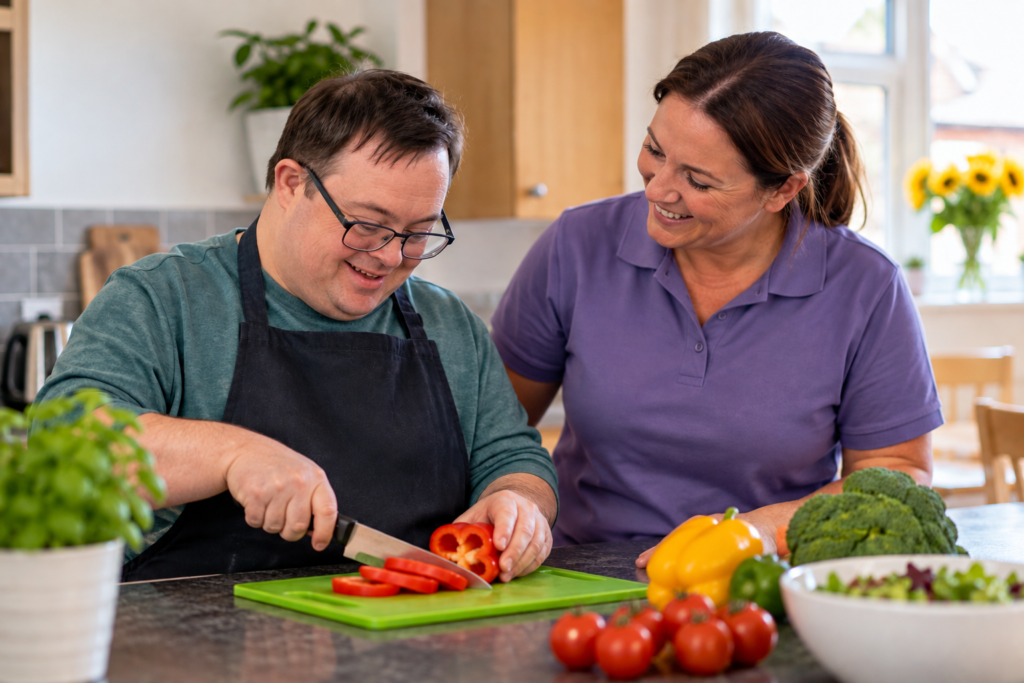
Preparing food, choosing clothes, looking after personal belongings, taking part in household tasks or planning an activity can all help somebody develop practical skills and confidence.
The level of involvement will naturally vary from person to person. One individual may complete a task independently with occasional guidance, while another may need more structured support.
What matters is recognising what each person can do and looking for appropriate opportunities to build upon it.
Sometimes allowing somebody extra time to complete something themselves can be far more valuable than completing it quickly on their behalf.
Choice and Control
Independence is not only about practical abilities. It is also about having a voice in your own life.
Wherever possible, people should be involved in decisions that affect them, including everyday choices about routines, meals and activities as well as wider goals and aspirations.
Meaningful choice requires staff to understand how each individual communicates and to provide information in a way that works for them.
It also means listening rather than assuming that we know what somebody wants.
Understanding Positive Risk-Taking
Supporting independence does not mean eliminating every possible risk.
Everyone makes decisions that involve some degree of risk. Preventing somebody from trying something purely because there is a potential risk can sometimes unnecessarily restrict their independence.
Positive risk-taking involves considering the potential benefits alongside the risks and identifying ways to make an experience as safe and achievable as possible.
With thoughtful planning and appropriate support, people can try new things, develop abilities and experience the confidence that comes from achieving something for themselves.
Finding the Right Balance
The right level of support is different for every individual and may change as their confidence, circumstances and abilities develop.
At Chrislyn House, promoting independence means understanding each person’s strengths, preferences and support needs and recognising opportunities for progress.
Good support is not measured simply by how much we do for somebody.
Sometimes the most meaningful outcome is what somebody discovers they can do for themselves.