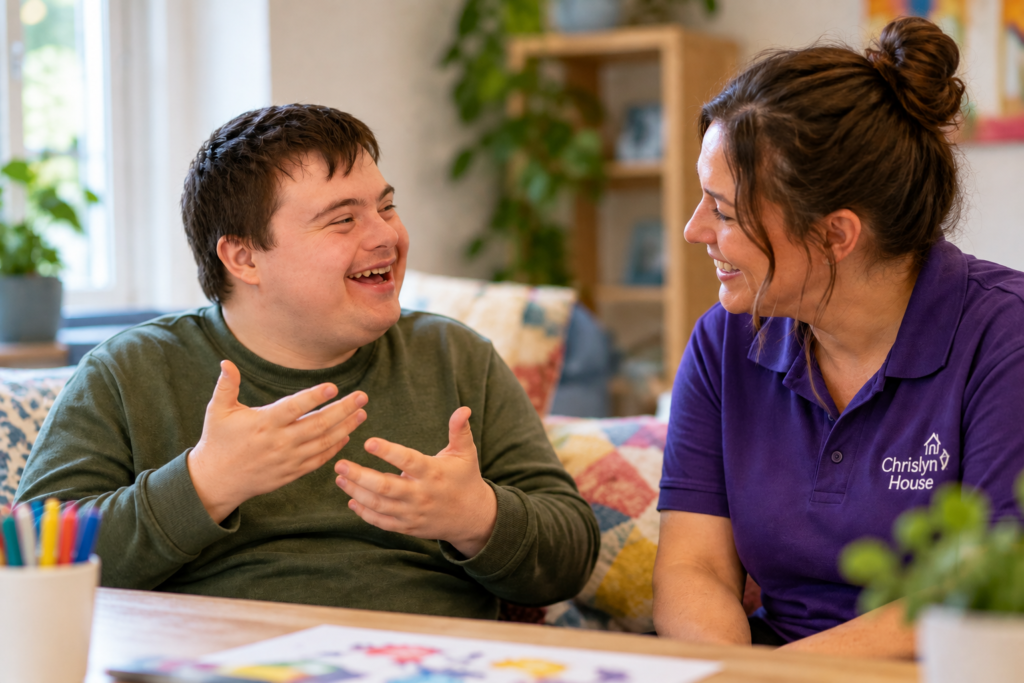
Communication plays an important role in good residential care, but not everybody communicates in the same way.
For people with learning disabilities, understanding someone’s individual communication style can be essential to ensuring their wishes, needs and preferences are recognised.
Good communication therefore begins with something very simple: getting to know the person.
Looking Beyond Spoken Communication
Speech is only one way we communicate.
Facial expressions, gestures, body language, behaviour, sounds and changes in someone’s usual routine can all communicate important information.
Someone who cannot easily explain that they are worried, uncomfortable or unhappy may show that feeling differently.
Staff need time to understand what is normal for an individual so that changes can be recognised.
Getting to Know the Individual
Relationships are particularly important.
The more familiar staff become with someone’s personality and communication, the easier it can be to understand what they may be trying to express.
Chrislyn House provides personalised support for people with learning disabilities and other associated needs, with trained staff supporting residents within the home.
That familiarity can also help people feel more comfortable communicating in whichever way works for them.
Supporting Choice
Communication isn’t only important when something is wrong.
It is central to everyday choice.
What would someone like to eat? Which activity would they prefer? Do they want to go out? Is there something they don’t want to do?
Providing genuine choices means making sure the person understands the options and has an appropriate way to communicate their preference.
Without that, decisions can too easily be made around someone rather than with them.
Working With Families and Professionals
Families, social workers and other professionals can hold valuable information about how an individual communicates.
Sharing that knowledge can help a residential service understand the person’s needs from the beginning and provide greater consistency.
Chrislyn House states that it works closely with healthcare professionals and social workers to make informed decisions for residents.
Communication Builds Better Support
Good communication requires patience, observation and a willingness to listen in more than one way.
For someone with a learning disability, being understood can affect everything from everyday comfort to their ability to make choices and participate in their own support.
Sometimes the most important thing a person is communicating isn’t said in words at all.
Making sure someone has a voice starts with learning how to listen.